There is quite an ongoing debate around the concept of citizen journalism and whether or not it is a good or bad practice.
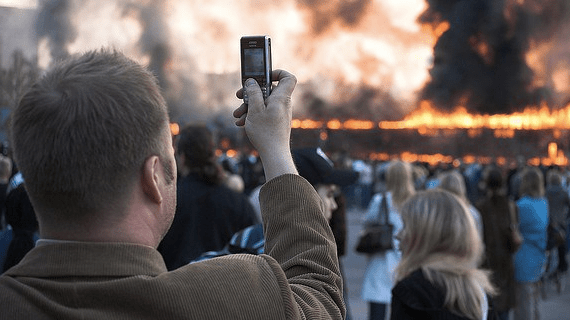
Citizen journalism is the action of reporting local and global news by members of society. How we have received our news has developed over the years. Today, we can receive and provide news from various platforms, and due to the advancements in technology and the internet, and its accessibility, it is now very easy for citizens to publish news specifically through social media, at a rapid rate. Citizens do not need to have any professional background or previous experience in journalism or reporting to publish posts about current events.

However, is this practice good or bad?
Citizen journalism has been regarded by professional journalism as “unethical, untrustworthy, too subjective and emotional, [and] said to be of poor technical quality or simply of no real news value”. Many argue that citizen journalism does not qualify as a reliable source of information. This is due to the fact that citizens may not conduct extensive research about a topic or event and can therefore be spreading inaccurate news. The point can be made that citizen journalism is heavily influenced by the individual’s personal opinion and may be trying to sway the public view on certain situations and can ultimately be influencing others’ opinions with deceptive and misleading information. However, Citizen Journalism allows for members of society to experience press freedom. People can share their research and raise awareness about issues that may not have been covered in mainstream media. Citizens journalism can also provide a more emotional side to news and can be a way for people to connect and empathise with one another, as “in cases of crisis coverage, which is said to be citizen journalism’s key area of contribution, citizen content often has been more focused on sharing emotions…”
On the contrary, this argument can also be made about mainstream media as no matter who informs us of news we can never truly be certain that it is accurate and reliable. Even large news and media organisations may not be informing the public about the whole situation and can withhold information. However professional journalists aim to provide truth and accuracy and are committed to news trustworthiness. These professionals are often fact-checked to ensure there is no fake news.

South Africa guarantees press freedom and is currently ranked 35th according to the World Press Freedom Index. This allows South Africa to reveal news events without any restrictions. The increasing availability of technology in South Africa has made “it possible for ordinary people to generate content and share it with others”. They believe that “Citizen journalists should just express themselves and share everything they think is important”. However many South Africans do not always trust the news and believe there is misinformation, they often find it hard to distinguish the difference between facts and fake news. This was especially found during the recent pandemic of Covid-19, leading to the public not trusting the government. There is also tension in regard to political events and opinions that can occasionally lead to threats.

In my opinion, citizen journalism is not necessarily good or bad as there are pros and cons to both citizen journalism and professional journalism.
 MayaCassar.Blogs
Leave a comment