Image of futuristic city generated by MidJourney

From dawn to beyond: Exploring humanities past present and future of technology

Various mediums can give us a glimpse at the past, present and future, allowing us to question both reality and the imagined. As Albert Einstein once said, “The future is an unknown, but a somewhat predictable unknown…”
To explore this notion I will be looking at cybernetics, which is defined as the communication and control in animals and machines (Ross Ashby 1956). This blog will delve into the narratives of three cinematic masterpieces 2001 Space Odyssey, Her, and Ghost in the Shell. Each of these films offers a unique perspective on the evolution of technology and its impact on society.
2001: A Space Odyssey

Stanley Kubrick’s 2001: A Space Odyssey is an exploration of the human evolution. The film unfolds in three distinct acts:
- The Dawn of Man
- Jupiter Mission
- Jupiter and Beyond the infinite
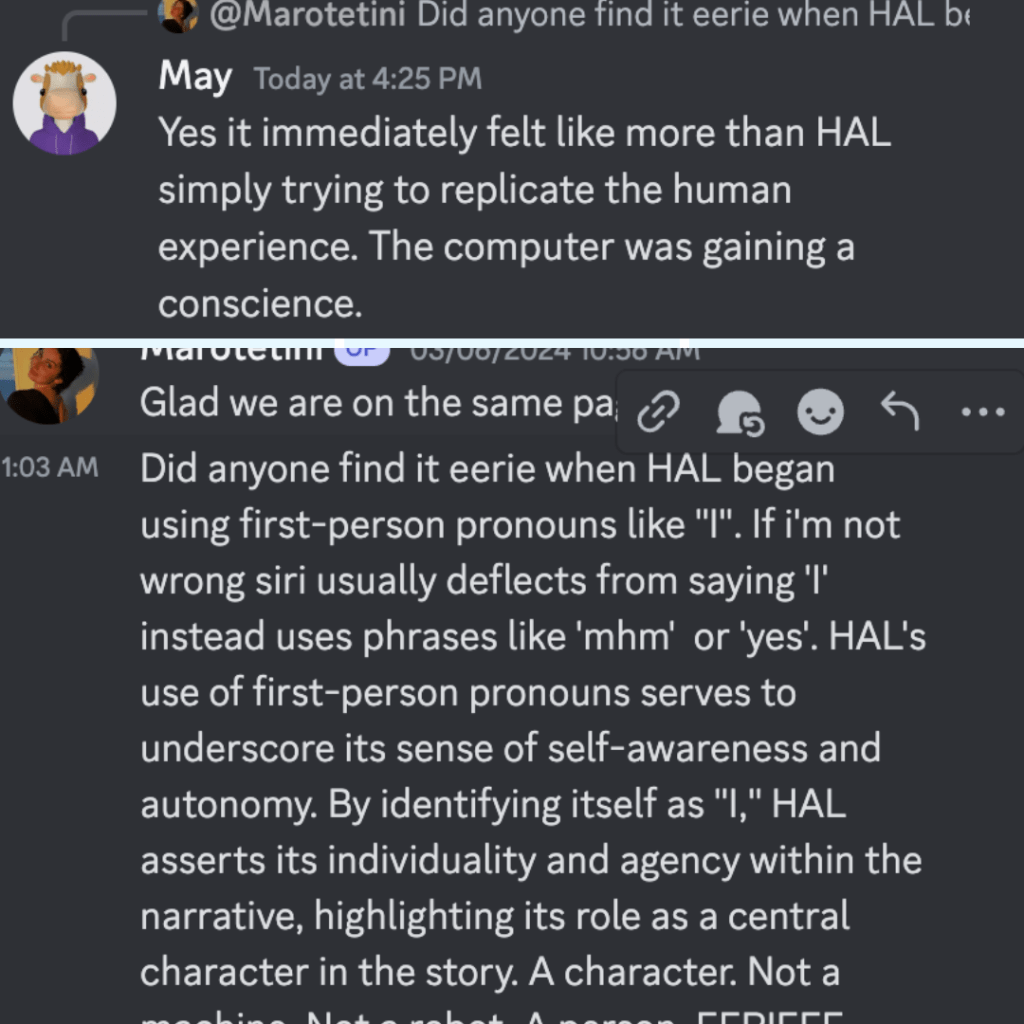
It could be argued that these sections represent the past, present and future of humanity. This narrative structure invites viewers to reflect on humanity’s journey, urging us to consider how we have evolved and what lies ahead (Bell 2002 & 2004). Kubrick used this visual medium to make us consider our connection with technology in the past, present and future (Davidson 2016). This is done successfully through the novum of the monolith which mirrors the screens that dominate our lives today. From the early scenes where apes discover the first monolith, sparking a curiosity that leads to the use of tools, to the discovery of a similar monolith on the moon, Kubrick suggests that our fascination with technology is an intrinsic part of our nature. Overall 2001: A Space Odyssey serves as a reminder that our connection with technology may have evolved but fundamentally it remains the same.
My peer engagement


Her
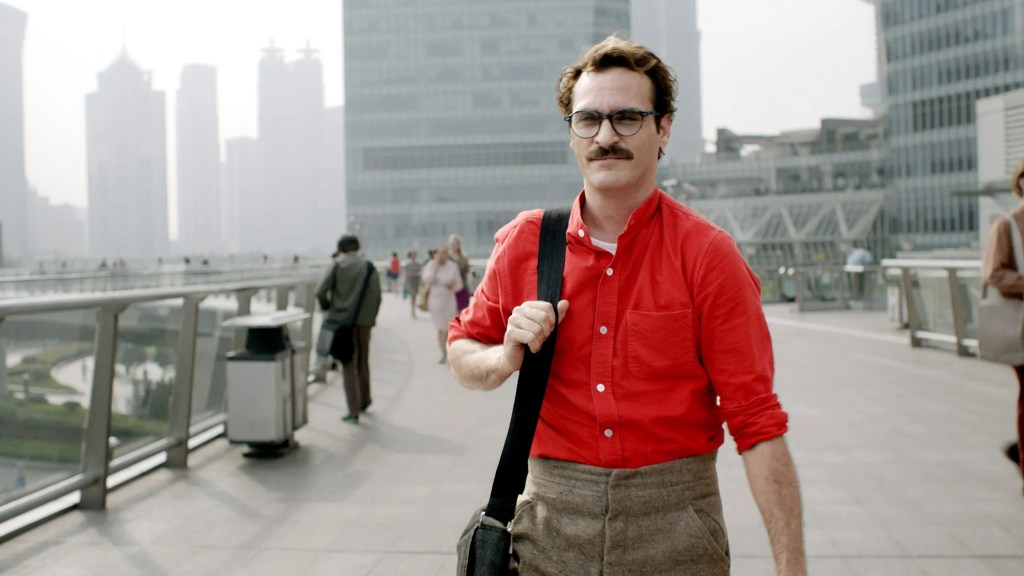
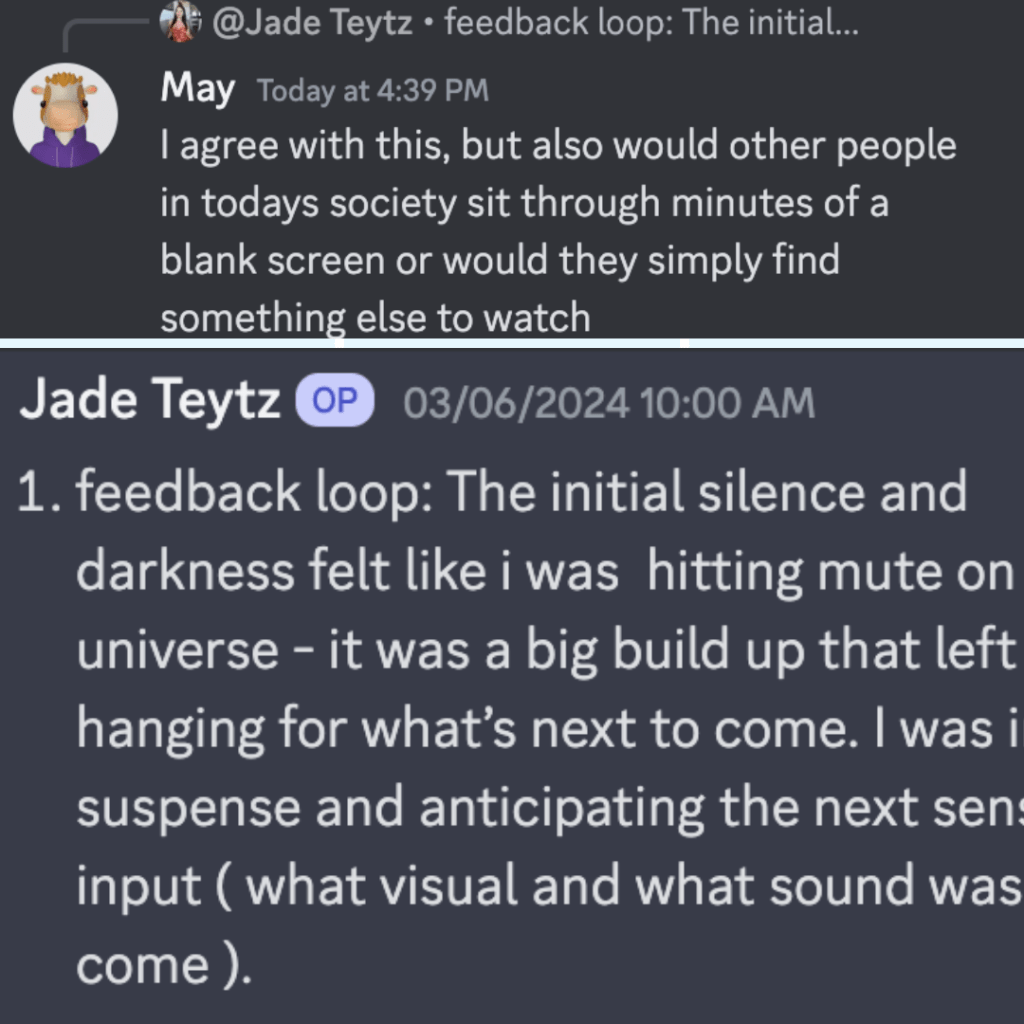
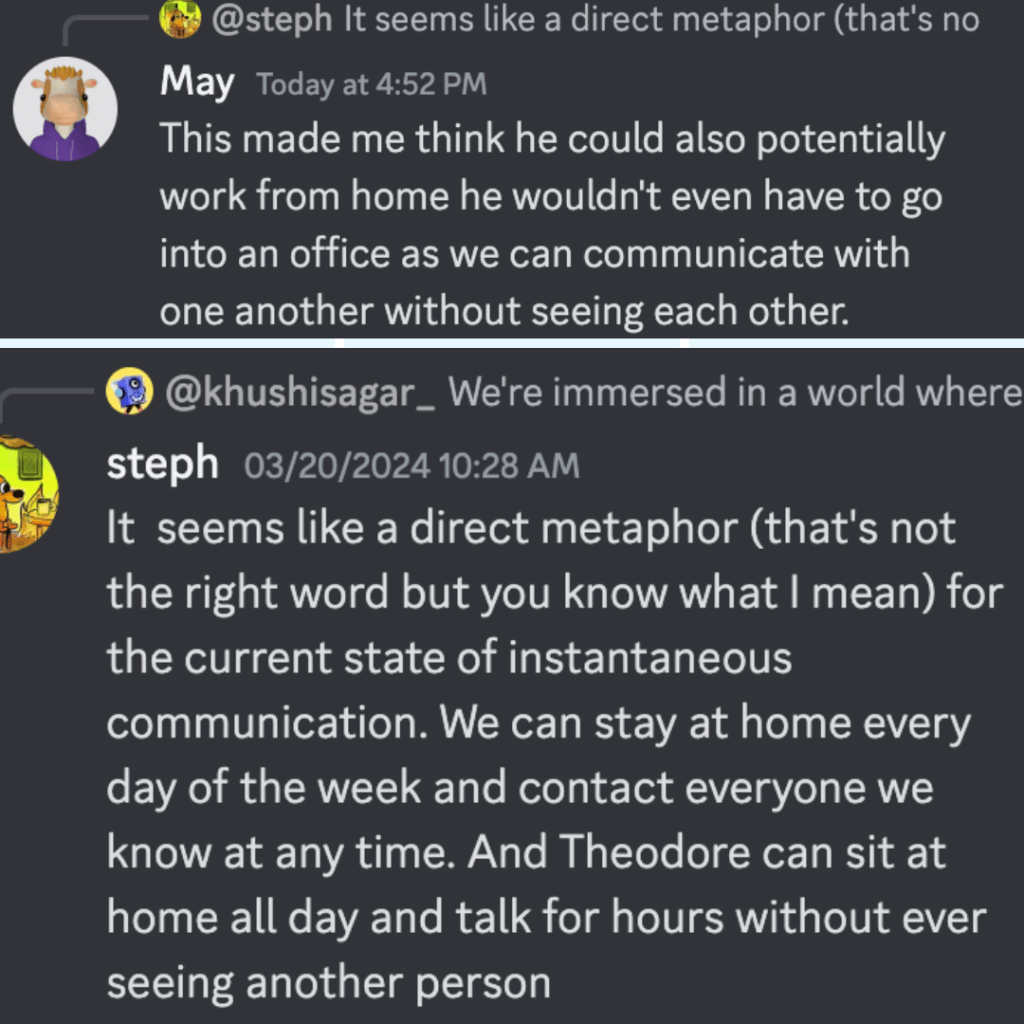
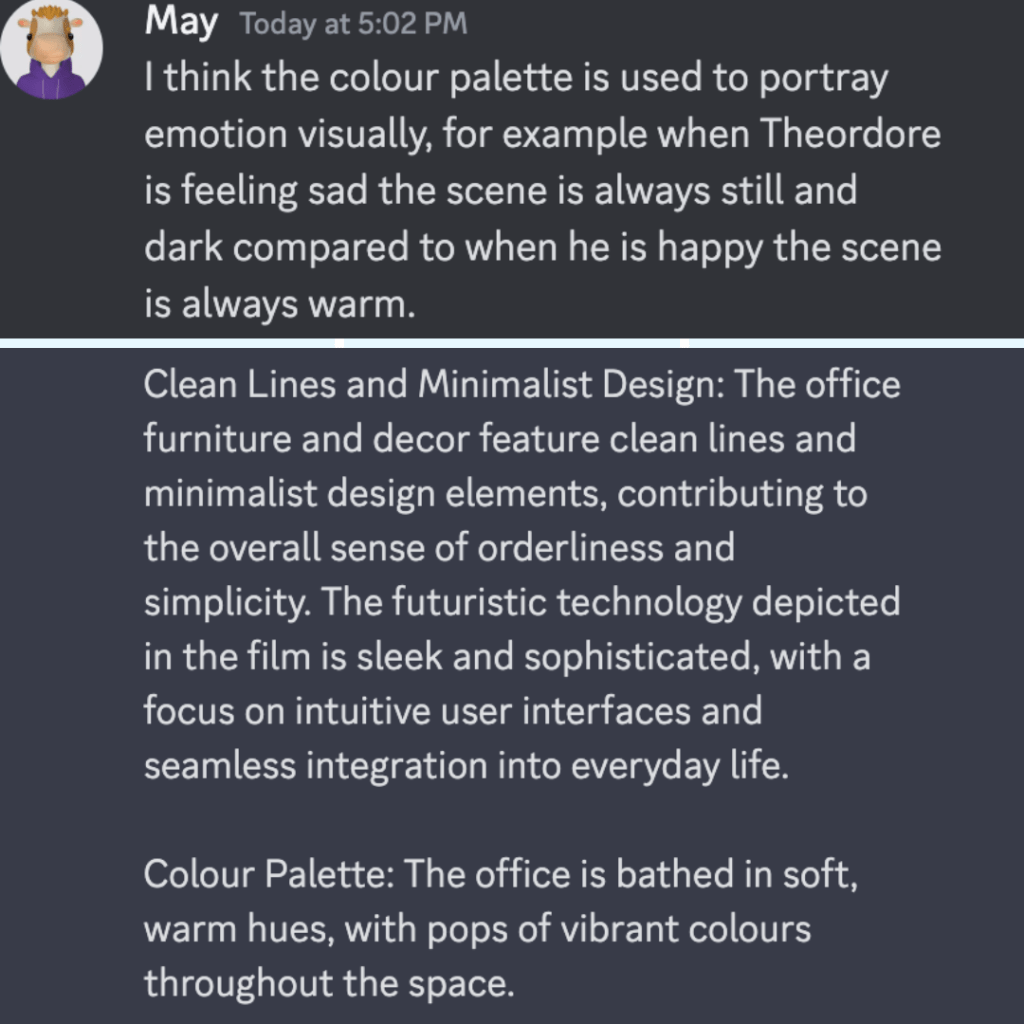
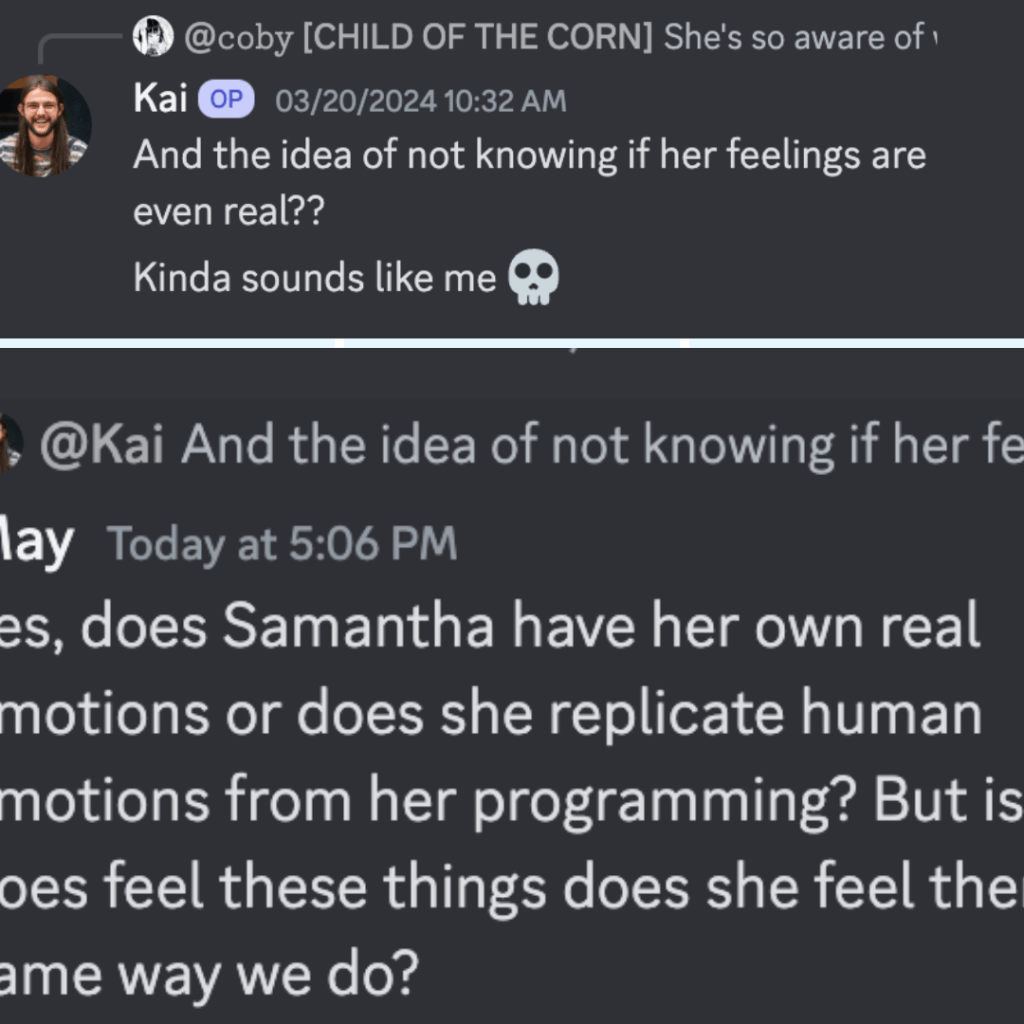
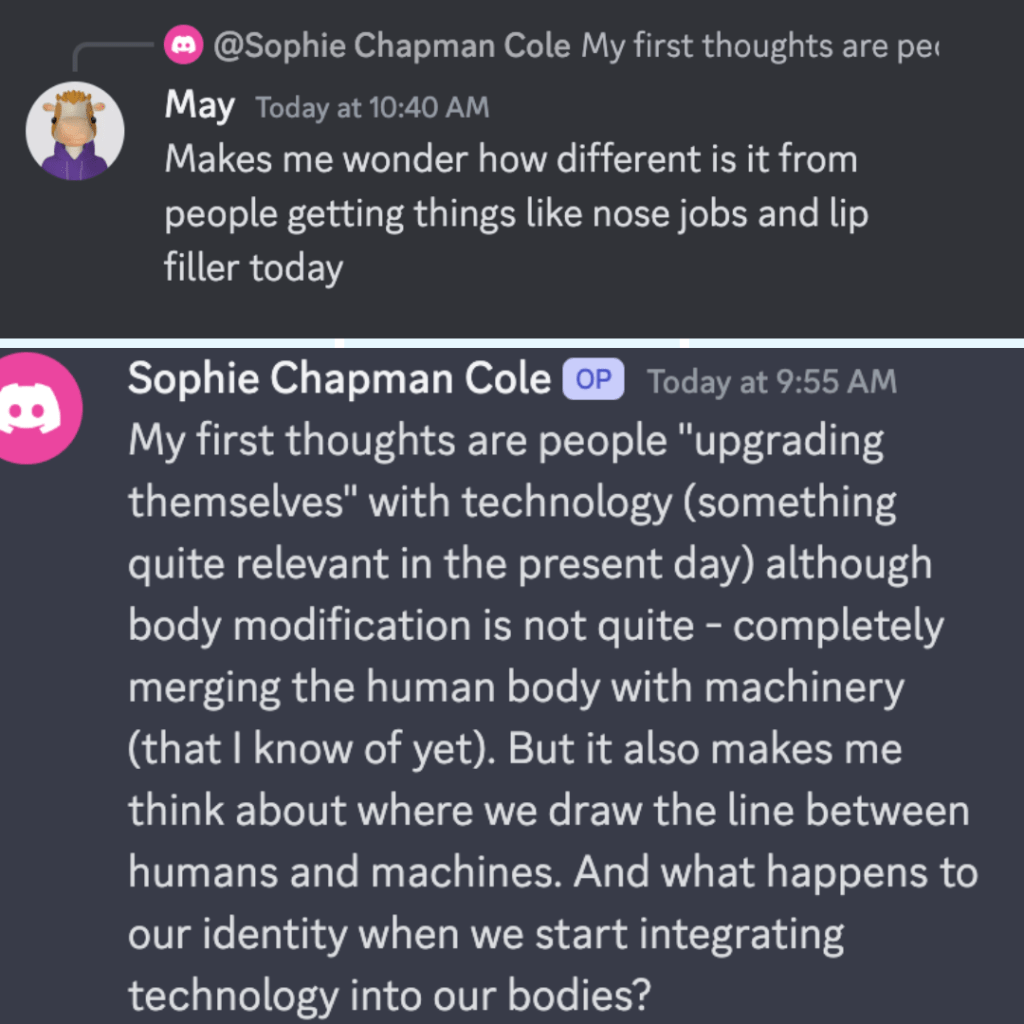
In today’s world, artificial intelligence (AI) is not just advancing but is beginning to integrate itself into our lives. Even though the film Her was released in 2013, it’s even more relevant today. Directed by Spike Jonze, Her paints a picture of a future where technology transcends utility and becomes an integral part of our emotional and social existence. The films protagonist Theordore showcases a life that is seamlessly intertwined with technology as he relies on his AI companion to not only help with daily tasks but also act as a companion. It reflects a society that has embraced technology to the point of dependency. But is it much different to how we use technology today? In the film, the operating system, Samantha, is the central novum which allows Jonze to explore the themes of love and loneliness (Evans 2018). This film anticipated the human need for connection, and the potential for technology to both alleviate and exacerbate these feelings. Jonze’s portrayal mirrors our current trajectory, where the line between human and digital interaction is increasingly blurred. Therefore, Her is not just about a man falling in love with with his operating system, but a timely commentary on our evolving relationship with technology and its impact on the human experience.
My peer engagement


Ghost in the Shell
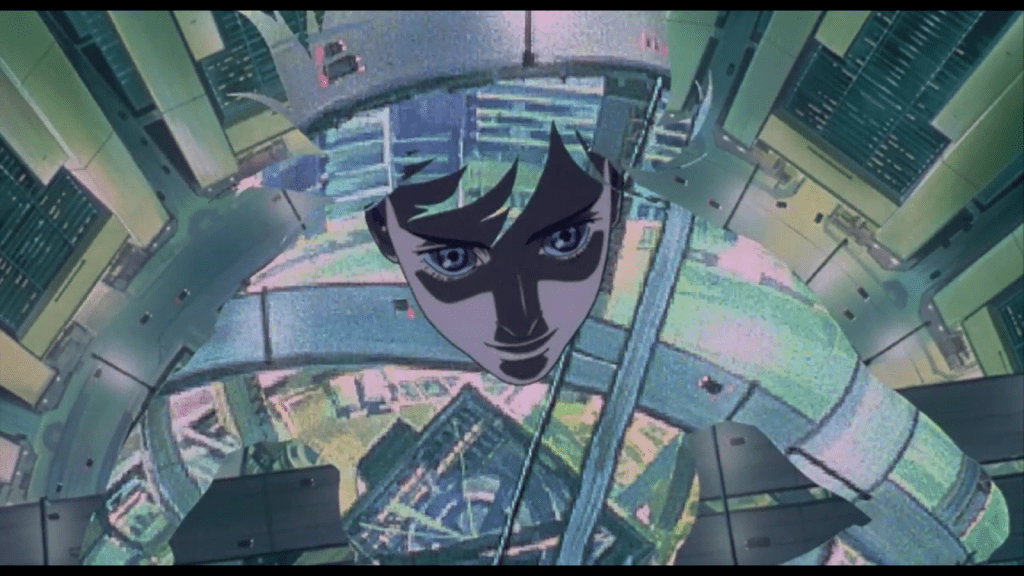
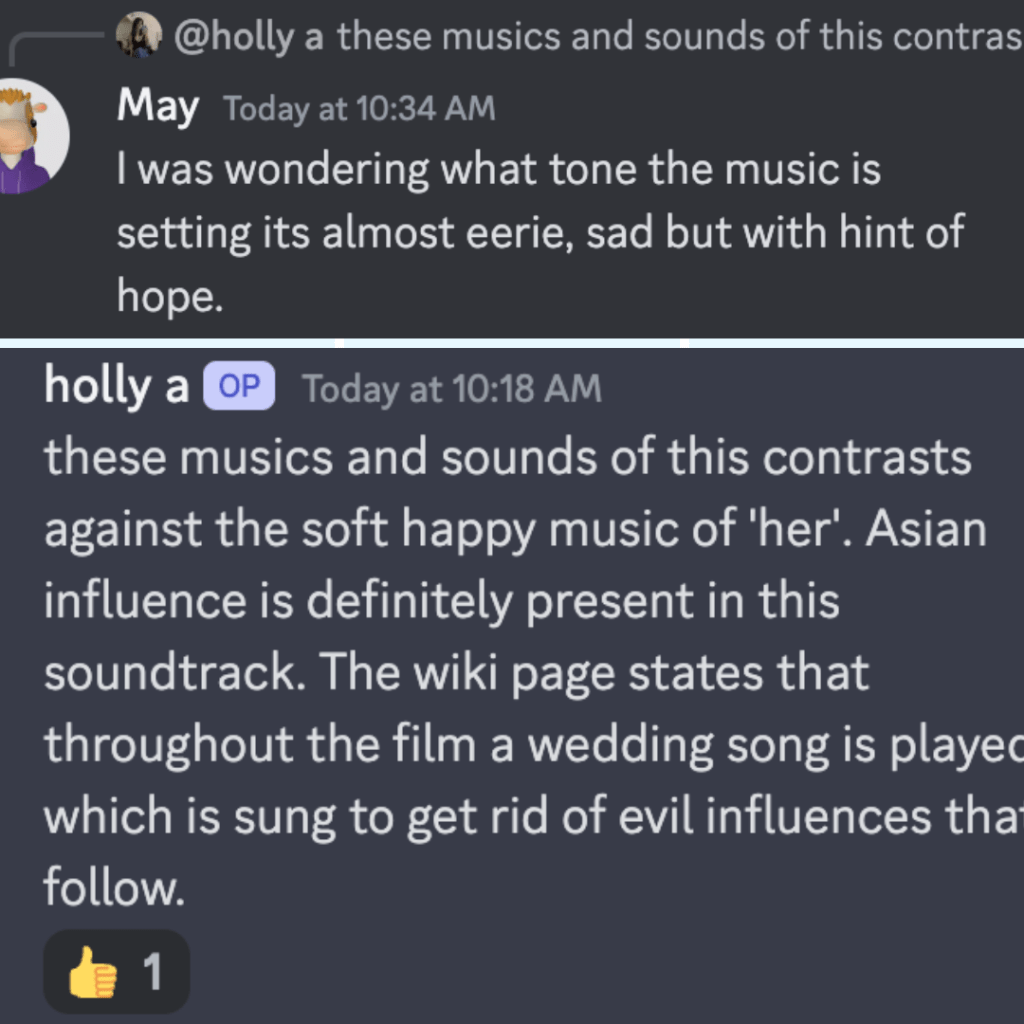
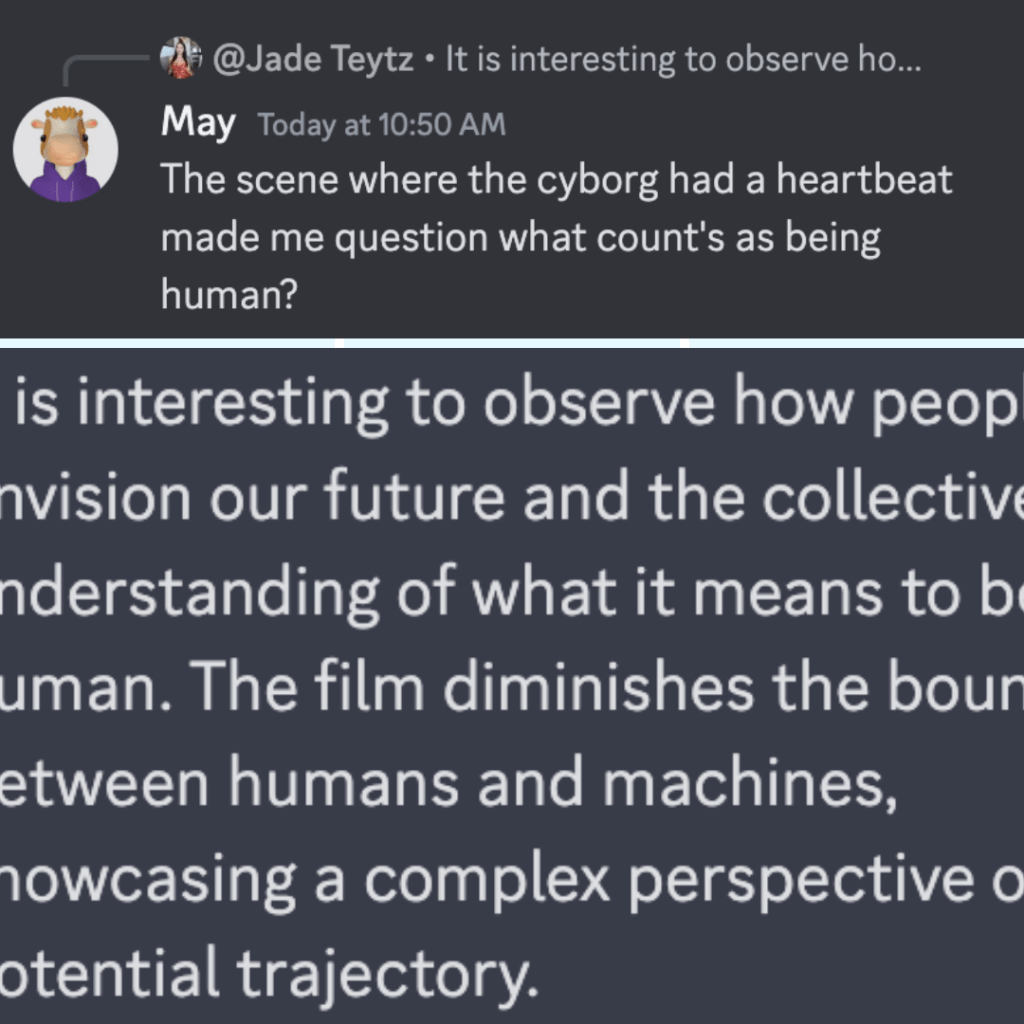
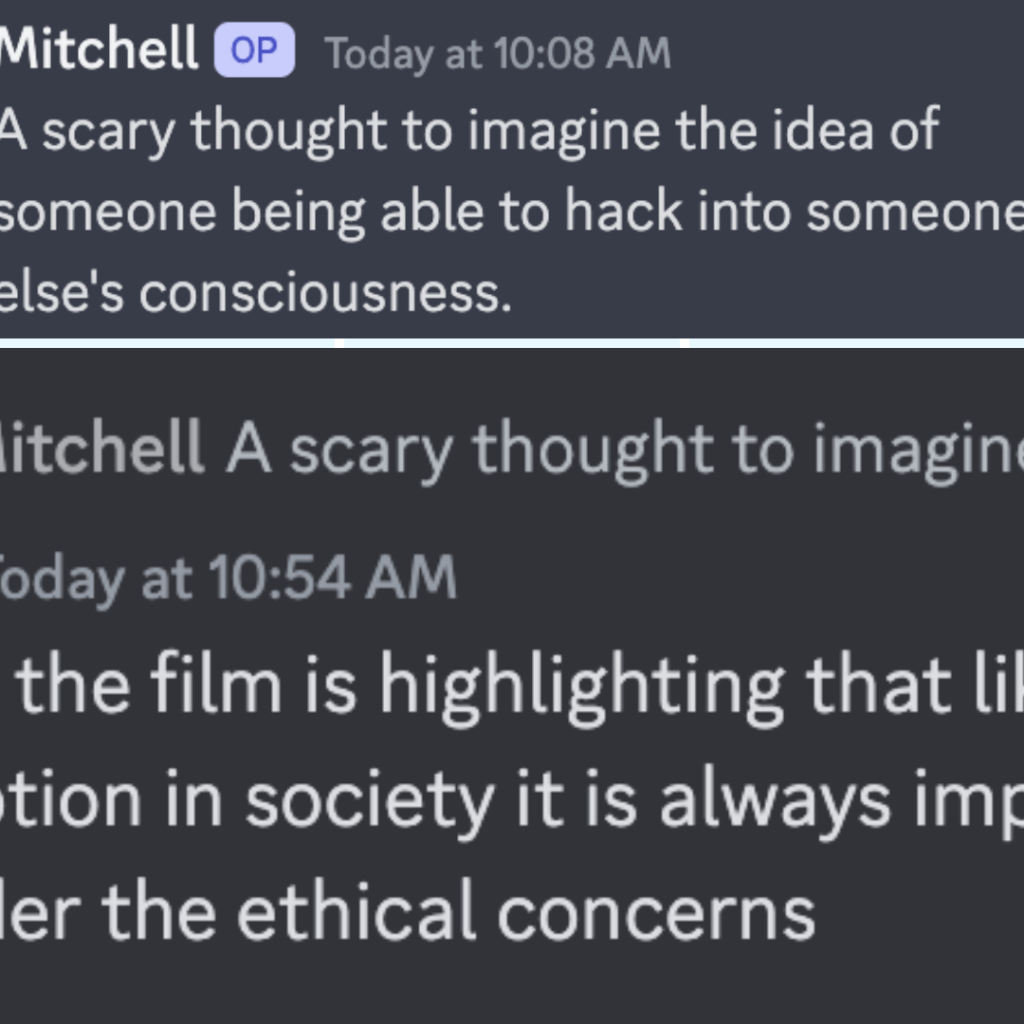
Ghost in the Shell delves into the intriguing prospect of a cybernetic future, immediately challenging viewers with the opening line “in the not-so-distant future” expressing that such a reality may be closer than we think. This ideology is continued throughout the film, “If man realises technology is within reach, he achieves it” highlighting the rapid acceleration of technological advanctement in recent decades. Similar to the movie Her, it raises the question of what defines one as human? (Wejbrandt 2014). It makes us question if cyborgs have their own identities by having them question the authenticity of their existence “Maybe there never was a real me in the first place”. Even if they have their own identities they “… lack the most basic life processes in all living organisms…”
My peer engagement

Task reflection
Overall, I feel I have developed an adequate grasp on the key concepts and themes in these films, however, there are a few thing I could improve on. When I analysed 2001: A Space Odyssey and Her I did not realise that we had to comment on other people’s discord posts, therefore, I had to rectify this and comment on posts after I had watched the films. When watching Ghost in the Shell, I remembered to react to my peer’s posts live. Furthermore, when reflecting on my Discord posts, I noticed that I need to incorporate further readings and research into my posts. By preparing readings before I watch the films I will have a better understanding of them before I watch them which will aid my critical thinking.
Note: this blog post was assisted by ChatGPT
Don’t have time to sit down and read? Listen to the key points in this blog:
References:
Barber, N 2018, Why 2001: A Space Odyssey remains a mystery, http://www.bbc.com, Viewed 4 April 2024, <https://www.bbc.com/culture/article/20180404-why-2001-a-space-odyssey-remains-a-mystery>
Bell, Wendell. (2002). Making people responsible: The possible, the probable, and the preferable. In James A. Dator (Ed.), Advancing futures: Futures studies in higher education (pp.33-52). Westport, CT: Praeger
Bell, Wendell 2004. Foundations of futures studies: human science for a new era: values, objectivity, and the good society (Vol. 2). 1st Edition. Routledge. New York.
Davidson, S 2016, ‘2001: A Space Odyssey’, Medium, Viewed 4 April 2024, <https://medium.com/@1005696/2001-a-space-odyssey-d4ea8d855c0b>
Evans, R 2018, ‘Nomenclature, Narrative, and Novum: “The Anthropocene” and/as Science Fiction’, Science Fiction Studies, vol. 45, no. 3, p. 484, Viewed 4 April 2024, <https://doi.org/10.5621/sciefictstud.45.3.0484>
Knibbs, K 2023, In the Age of AI, ‘Her’ Is a Fairy Tale, Wired, Viewed 4 April 2024, <https://www.wired.com/story/spike-jonze-her-10-year-anniversary-artificial-intelligence/>
Ross Ashby, W 1956, An Introduction to Cybernetics, Chapman & Hall, London, Viewed 4 April 2024, <https://philpapers.org/archive/ASHAIT-6.pdf.>
Sipos, M & Botts, E 2024, Ghost in the Shell Predicts Humanity Crossing the Event Horizon into the Technological Singularity, The Other Folk, Viewed 4 April 2024, <https://www.theotherfolk.blog/dissections/ghost-in-the-shell> Wejbrandt, A 2014, ‘Defining aging in cyborgs: A bio-techno-social definition of aging’, Journal of Aging Studies, vol. 31, pp. 104–109, Viewed 4 April 2024, <https://doi.org/10.1016/j.jaging.2014.09.003>
Get in Touch
mayacassar@live.com
0488 660 452
 MayaCassar.Blogs
Leave a comment