
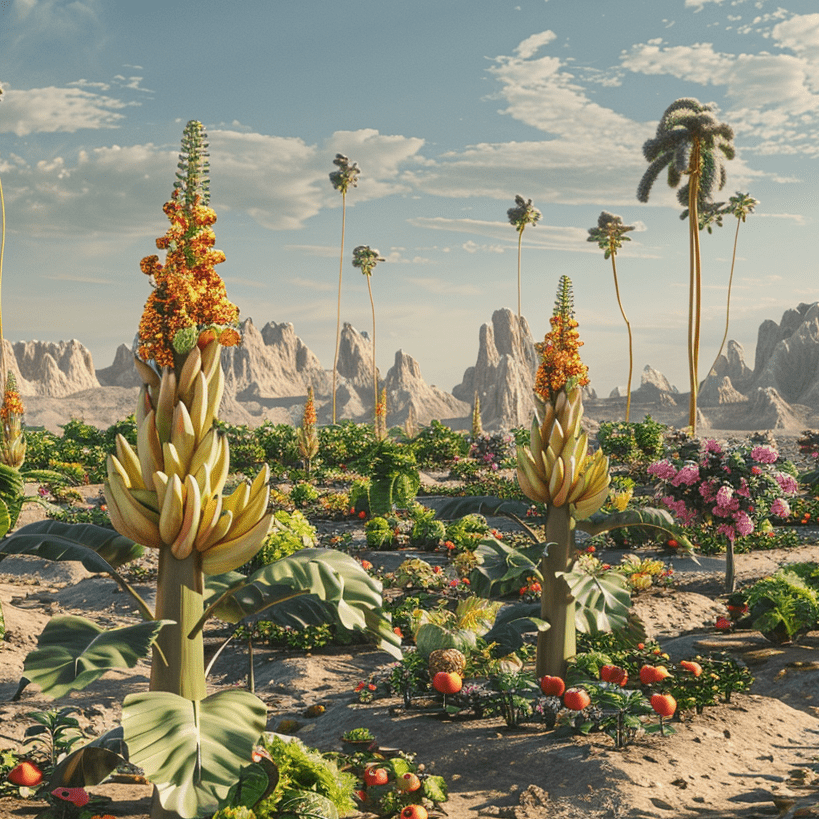
Image of futuristic genetically modified crops generated by MidJourney

2040: A Glimpse Into the Future of Climate Change and Agriculture
Agriculture is the primary source of nutrients that humans and animals require (Zhao & Shewry 2011). However, agriculture in the 21st century faces numerous challenges, and not everyone has access to the food they need for an active and healthy lifestyle (Nezhmetdinova et al. 2020). Biotechnology could play a key role in the future of agriculture, yet this technology’s future is far from certain. I will once again be using Wendell Bell’s framework to analyse the future of biotechnology in agriculture from the possible, probable, and preferable perspectives (Bell 2002 & 2004).
In my last blog regarding the future of agriculture, I may have been overly optimistic about what the year 2030 would look like. While 2030 sounds futuristic, it is only 6 years away, making it unlikely that we will have fully transitioned to producing and harvesting genetically modified crops. However, 2040 is 16 years away, and I believe that by this time, we will begin to actively integrate biotechnology into everyday agricultural practices.

The Possible:
There is a real possibility that public opposition to the use of biotechnology in agriculture could force us to abandon this technology. In our contemporary society, many individuals are either uneducated or hold rigid beliefs, with a vast population of “Far-right nationalists, libertarians and conspiracy theorists” (Roose 2021). These groups typically distrust modern science and technology. For those who may doubt this possibility, just consider the amount of anti-vaxxers who were extremely distraught during the Covid-19 vaccination regulations. According to Roose (2021), “These movements thrive on anxiety, anger, a sense of alienation, a distrust in government and institutions”. This also leads to significant hostility towards professionals in these fields (Chapman 2012). These threats and the overt public criticism, make it difficult for experts to advocate and advance biotechnological solutions. Opposition to biotechnology in agriculture would provide broad implications for society, as biotechnology promises numerous benefits, including increased crop yields, improved nutritional content and resistance to pests and diseases (Biotechnology – United States Department of State 2022). However, the distrust in modern science and technology can lead to widespread misinformation and fear, which can then manifest into public campaigns, legal challenges, and policy shifts that hinder the adoption of biotechnological innovations. Therefore, it is conceivable that public opposition could force us to abandon biotechnology in agriculture, driven by individuals determined to defend their views regardless of broader consequences. Personally, as an advocate for genetically modified crops, I find it unfair how a few people can ruin the future for the majority.
The Probable:
But what is probable? As I discussed in my previous blog, there is overwhelming evidence that shows that rapid climate change is a pressing concern. With the global population increasing, the risk of reduced yields of major food crops due to climate change grows. Thus, developing genetically enhanced, stress-resistant crops will become a top research priority (Steinwand & Ronald 2020). However, it is likely that the incorporation of genetically engineered crops will not be actively utilised, at least not in the way it should be. This solution is challenging to implement, specifically on a mass scale due to the various factors that influence genetically modified crop development as research, development and testing require significant investment, which can be prohibitive for many countries, particularly developing countries. Strict regulations are also necessary surrounding the approval and cultivation of GMOs to ensure safety and environmental processes but this can slow down the adoption process. Consumer acceptance is also another critical hurdle. Many consumers are sceptical of GMOs due to perceived health risks and environmental concerns, which can lead to reduced market demand and make them less economically viable for investors. National and International interventions such as trade policies and agreements can also hinder the distribution of GMOs across borders. (Zhao & Shewry 2011).
The implementation of GMOs comes with a long list of possible risks, including
- Food risks e.g. allergic reactions
- Environmental risk e.g. cross-breeding with wild plants
- Agronomic risks e.g. development of disease and pest resistance
- Patent risks e.g. ownership and accessibility for farmers
- Social risks e.g. the potential to exacerbate inequalities
- Ethical risks e.g. moral implications of altering genetic makeup
(Nezhmetdinova et al. 2020)
It would take years for nations to analyse these risks and develop laws and regulations surrounding the production and distribution of these crops. This regulatory process, combined with the need for extensive public and scientific review, could take more than 16 years. Furthermore, it may take even longer for this technology to be shared with developing countries, where the need for stress-resistant crops is most urgent. These countries may lack the infrastructure, financial resources, and regulatory frameworks necessary to adopt GMOs quickly, further delaying the potential benefits of genetically enhanced crops in addressing food security and climate resilience. Even though I believe these crops could greatly reduce the negative impacts of poverty in third-world countries, it appears this solution is not simple to implement.

The Preferable:
So we’ve examined the possible and probable, now what is a preferable scenario?
In a preferable scenario, the public would be open to and actively support the development and incorporation of genetically modified crops. Public acceptance is crucial as it would facilitate smoother regulatory processes, increase market demand, and encourage investment in biotechnological research and development. An informed and supportive public would also help dispel myths and misinformation surrounding GMOs, fostering a science-based discussion about their benefits and risks. The use of this technology will be beneficial on a global scale, particularly in third-world countries, where it could produce sustainable and nutritional crops capable of thriving in harsh environments. In these regions, GM crops could address critical challenges such as drought, poor soil quality and extreme weather conditions, ensuring stable food supplies and reducing the risk of famine. Additionally, GM crops can enhance the flavour and nutritional value addressing the nutritional inadequacies of modern diets (Wieczorek 2003). This is crucial, as in developing countries more than 2 billion people suffer from malnutrition, which is largely due to the poor bioavailability of nutrients in their diet (Zhao & Shewry 2011). This would help combat micronutrient deficiencies, improve overall health and reduce the prevalence of diseases specifically related to malnutrition. Ultimately, by utilising biotechnology in agriculture we pave the way for the future of science, improving both human and animal well-being, by ensuring consistent and substantial crop yields for the entire growing population.
By considering the possible, probable, and preferable scenarios, we can better understand the potential trajectories of agricultural biotechnology and work towards a future that harnesses its full potential for the benefit of all.
Note: this blog post was assisted by ChatGPT
Don’t have time to sit down and read? Listen to the key points in this blog:
References:
Bell, Wendell 2002, Making people responsible: The possible, the probable, and the preferable. In James A. Dator (Ed.), Advancing futures: Futures studies in higher education (pp.33-52). Westport, CT: Praeger, Viewed 2 April 2024 <https://www.dropbox.com/scl/fi/xq2avey7ofccnali11ya9/bell-1998-making-people-responsible-the-possible-the-probable-and-the-preferable.pdf?rlkey=rcyxqv894pxp2zrbhn3w30rqu&dl=0>
Bell, Wendell 2004, Foundations of futures studies: human science for a new era: values, objectivity, and the good society (Vol. 2). 1st Edition. Routledge. New York, Viewed 2 April 2024, <https://www.dropbox.com/scl/fi/mfi4b10lkvkebp8h2mrph/an_overview_of_fs_1996.pdf?rlkey=wgceyh1mtobzo0rdbrl5wfhq5&dl=0>
Biotechnology – United States Department of State 2022, United States Department of State, viewed 29 May 2024, <https://www.state.gov/agricultural-policy/biotechnology/#:~:text=The%20Benefits%20and%20Challenges%20of%20Biotechnology&text=Biotechnology%2C%20as%20applied%20to%20agriculture>
Chapman, S 2012, Hate mail and cyber trolls: the view from inside public health, The Conversation, viewed 26 May 2024, <https://theconversation.com/hate-mail-and-cyber-trolls-the-view-from-inside-public-health-9329>
Lanchovichina, E, Burger, M & Witte, C 2020, Why are people protesting?, Brookings, viewed 29 May 2024, <https://www.brookings.edu/articles/why-are-people-protesting/>
Nezhmetdinova, FT, Guryleva, ME, Sharypova, NKh, Zinurova, RI & Tuzikov, AR 2020, ‘Risks of modern biotechnologies and legal aspects of their implementation in agriculture’, in D Fayzrakhmanov, B Ziganshin, F Nezhmetdinova & R Shaydullin (eds), BIO Web of Conferences, vol. 17, no. 00227, p. 00227, viewed 28 May 2024, <https://www.bio-conferences.org/articles/bioconf/full_html/2020/01/bioconf_fies2020_00227/bioconf_fies2020_00227.html>
Roose, J 2021, ‘It’s almost like grooming’: how anti-vaxxers, conspiracy theorists, and the far-right came together over COVID, The Conversation, viewed 26 May 2024, <https://theconversation.com/its-almost-like-grooming-how-anti-vaxxers-conspiracy-theorists-and-the-far-right-came-together-over-covid-168383>
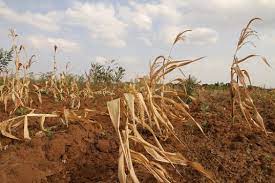
Sighn, T 2012, Dead crops, INHABITAT, viewed 29 May 2024, <https://inhabitat.com/fungus-infused-superplants-could-survive-forthcoming-us-droughts/dead-crops/>
Steinwand, MA & Ronald, PC 2020, ‘Crop biotechnology and the future of food’, Nature Food, vol. 1, no. 5, pp. 273–283, viewed 26 May 2024, <10.1038/s43016-020-0072-3>
Wieczorek, A 2003, ‘Use of Biotechnology in Agriculture – Benefits and Risks’, College of Tropical Agriculture and Human Resources, Viewed 2 April 2024, <https://scholarspace.manoa.hawaii.edu/server/api/core/bitstreams/61f78c8b-8723-4fc1-88e3-55ccecbad966/content>
Zhao, F-J & Shewry, PR 2011, ‘Recent developments in modifying crops and agronomic practice to improve human health’, Food Policy, vol. 36, no. 1, pp. S94–S101, viewed 28 April 2020, <https://doi-org.ezproxy.uow.edu.au/10.1016/j.foodpol.2010.11.011>
Get in Touch
mayacassar@live.com
0488 660 452


Leave a Reply